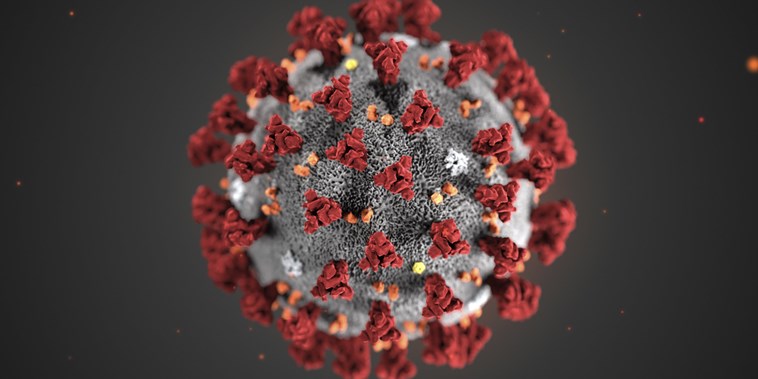
In an article from the New England Journal of Medicine, new insight has been shed on the new developing coronavirus that originated from Wuhan, China. In this particular investigation, the coronavirus that was taken from bronchoalveolar lavage fluid samples of three infected patients were most similarly matched to a bat like SARS with about an 85% genome match (Zhu, 2019). In terms of morphology, the virus is spherical and has unique spikes that gives the virus the appearance of a solar corona. The new coronavirus, much in line with the Coronaviridae family, had virions in vesicles in the cytoplasm of the human respiratory epithelial cells. Interestingly, it seems as though the reason why the novel coronavirus was designated as a new virus was that the viral genome sequence of the RNA dependent RNA polymerase domain matched at less than 90% with other betacoronaviruses (Zhu, 2019). Therefore, although similar in genome to bat like SARS and other coronaviruses, the novel coronavirus does have different nucleotide sequences in the open reading frame of the replicase genes.
Other things we know about the novel coronavirus is that it is a single stranded positive RNA and we know of the four genera; it is the beta genera that infects humans. It is highly believed to be a zoonosis due to the fact that infection was first reported from Wuhan seafood market and also due to the fact that the genome matches closely with bat like SARS. One of the most important findings is that the novel coronavirus may work through the ACE2 host receptor to initiate infection (Paules, Marston, & Fauci, 2020). This is similar to SARS in how the coronavirus is mainly seen in the lower respiratory tract where ACE2 is abundant, rather than the upper respiratory tract. Finally, it has been determined that the novel coronavirus can spread via human to human transmission. This was mainly discerned from the fact that 15 healthcare providers were infected in a Wuhan hospital (Paules, Marston, & Fauci, 2020). I think given the context of what is known about the new coronavirus, it may be important to ask if laws should be implemented to prevent certain animals from being sold in live markets. While this would require intensive oversight from Chinese governmental officials, it does seem reasonable limiting the sale of certain wild animals that are likely to be reservoirs for pathogenic viruses would at least be a reasonable discussion. Again, this may be hard to implement and I am not sure exactly how oversight would be conducted, but it seems that measures need to taken to prevent obvious reservoirs of infection from coming in such close proximity to a large number of people.
With new evidence starting to suggest that human to human transmission is possible with the new coronavirus, it is important to ask what measures are being taken to prevent the spread of the disease. Using SARS-CoV and MERS-CoV, scientists are prototyping new antivirals that inhibit RNA polymerase and beta interferons against novel coronavirus strains (Paules, Marston, & Facui, 2020). Vaccines are also being pursued with nucleic acid platforms using mRNA technology (Paules, Marston, & Fauci, 2020). It is nice to see that prompt action is taking place to find treatments and prevention against the novel coronavirus. Although it appears the case fatality rate for the novel coronavirus is lower at the moment than SARS and MERS, it is still important to innovate toward new preventions to reduce the incidence of infection going forward. At the moment, restricting travel to and from Wuhan and isolating people infected with the disease will be important in controlling the transmission of the novel coronavirus. Additionally, international cooperation will be necessary in keeping the virus isolated.

 Infectious Disease