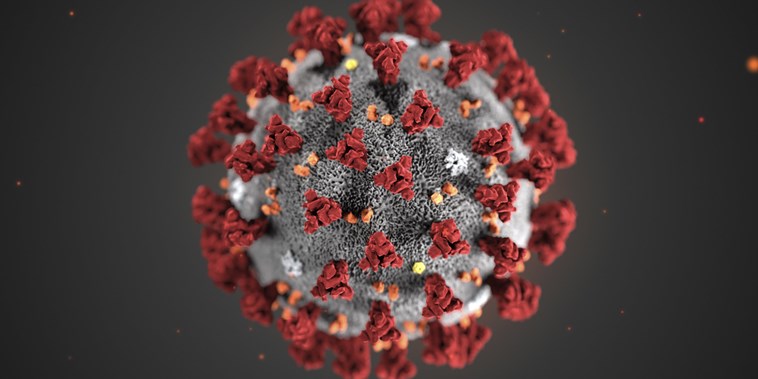
Coronavirus: What do We Know?

In an article from the New England Journal of Medicine, new insight has been shed on the new developing coronavirus that originated from Wuhan, China. In this particular investigation, the coronavirus that was taken from bronchoalveolar lavage fluid samples of three infected patients were most similarly matched to a bat like SARS with about an 85% genome match (Zhu, 2019). In terms of morphology, the virus is spherical and has unique spikes that gives the virus the appearance of a solar corona. The new coronavirus, much in line with the Coronaviridae family, had virions in vesicles in the cytoplasm of the human respiratory epithelial cells. Interestingly, it seems as though the reason why the novel coronavirus was designated as a new virus was that the viral genome sequence of the RNA dependent RNA polymerase domain matched at less than 90% with other betacoronaviruses (Zhu, 2019). Therefore, although similar in genome to bat like SARS and other coronaviruses, the novel coronavirus does have different nucleotide sequences in the open reading frame of the replicase genes.

Other things we know about the novel coronavirus is that it is a single stranded positive RNA and we know of the four genera; it is the beta genera that infects humans. It is highly believed to be a zoonosis due to the fact that infection was first reported from Wuhan seafood market and also due to the fact that the genome matches closely with bat like SARS. One of the most important findings is that the novel coronavirus may work through the ACE2 host receptor to initiate infection (Paules, Marston, & Fauci, 2020). This is similar to SARS in how the coronavirus is mainly seen in the lower respiratory tract where ACE2 is abundant, rather than the upper respiratory tract. Finally, it has been determined that the novel coronavirus can spread via human to human transmission. This was mainly discerned from the fact that 15 healthcare providers were infected in a Wuhan hospital (Paules, Marston, & Fauci, 2020). I think given the context of what is known about the new coronavirus, it may be important to ask if laws should be implemented to prevent certain animals from being sold in live markets. While this would require intensive oversight from Chinese governmental officials, it does seem reasonable limiting the sale of certain wild animals that are likely to be reservoirs for pathogenic viruses would at least be a reasonable discussion. Again, this may be hard to implement and I am not sure exactly how oversight would be conducted, but it seems that measures need to taken to prevent obvious reservoirs of infection from coming in such close proximity to a large number of people.

With new evidence starting to suggest that human to human transmission is possible with the new coronavirus, it is important to ask what measures are being taken to prevent the spread of the disease. Using SARS-CoV and MERS-CoV, scientists are prototyping new antivirals that inhibit RNA polymerase and beta interferons against novel coronavirus strains (Paules, Marston, & Facui, 2020). Vaccines are also being pursued with nucleic acid platforms using mRNA technology (Paules, Marston, & Fauci, 2020). It is nice to see that prompt action is taking place to find treatments and prevention against the novel coronavirus. Although it appears the case fatality rate for the novel coronavirus is lower at the moment than SARS and MERS, it is still important to innovate toward new preventions to reduce the incidence of infection going forward. At the moment, restricting travel to and from Wuhan and isolating people infected with the disease will be important in controlling the transmission of the novel coronavirus. Additionally, international cooperation will be necessary in keeping the virus isolated.
Andrew Wakefield: A Fraud in Plain Site

https://sciencebasedmedicine.org/brian-hooker-and-andrew-wakefield-accuse-the-cdc-of-scientific-fraud-irony-meters-everywhere-explode/

Andrew Wakefield, in 1998, published a series in the Lancet journal claiming that the Mumps, Measles, and Rubella vaccine was a causative factor in autism (Rao & Andrade, 2011). He made this association on a sample size of only 12 patients. For anyone who understands basic research design, this should have been a major red flag to begin with. No assertions or associations can be made solely on the basis of 12 people. I am not sure if it is even possible to establish statistical significance with this small of a sample size. One of the major problems with Wakefield’s research design was how he obtained his sample to begin with. In fact, he falsified that his sampling was consecutive in his paper, when it was a completely selected sample instead. Wakefield conveniently chose kids that all had gastrointestinal problems and autism, and simply linked that association to his hypothesis of translocated peptides (Gerber & Offit, 2010). Not only that, Wakefield did not pass any ethical guidelines in his investigation of his patients. None of the assessments were done in a systemic or blind manner. As a result, none of his research was verified by independent scientists. In fact, research has established that measles virus vaccine virus is equally present in those with and without autism (Gerber & Offit, 2010).

Andrew Wakefield‘s motive was clear; he was financed by lawyers of parents who were against vaccine companies (Rao & Andrade, 2011). In evaluating this saga, the whole situation is sad and very sick. Wakefield took advantage of a vulnerable population for his own gain and did not follow any ethical research guidelines in the process. I think one has to ask the question; how can we ensure that scientists take every precaution to conduct ethical research? Wakefield’s small editorial had enormous consequences. Incidences of Measles, Mumps, and Rubella increased during this time because Wakefield preyed on the fears of the general public. At the end of the day, the only people who had to suffer the consequences were the children who contracted Measles because of Wakefield’s faulty claims.

Interestingly, findings are started to suggest that a third dose of Measles, Mumps, and Rubella vaccine may provide enhanced immunity against Mumps in young adults already vaccinated with two doses of MMR in the Netherlands (Kaaijk et al., 2019). Young adults given MMR-3 had increased antibodies levels associated with the Mumps virus specific immunoglobulin G (Kaaijk et al., 2019). These findings are significant because it suggests that a third MMR vaccine among vaccinated individuals may provide additional protections for a longer amount of time against Mumps. The most interesting finding was that the MMR-3 provided more antibody response tested against an outbreak strain (Kaaijk et al., 2019). I thought this study was particularly interesting because it may suggest that additional vaccination may be more protective for areas where Mumps outbreaks are likely to occur. Should we be vaccinating ourselves more against Mumps, Measles, and Rubella? Additionally, how do we effectively communicate to the general population as a whole that additional vaccination may prove to protect us even more? These are some of the intriguing question that came to mind when reading these findings. It seems that a lot of research, regarding how vaccination is beneficial to protecting us against Mumps, Measles, and Rubella, is out there. However, how can we translate these scientific findings to wide scale action in the global population?

Sean O Bio

My name is Sean O’Connor. My future aspirations are to attend Pharmacy school and work with Alzheimer’s research. I have four dogs. I have two malti tzus and two golden doodles. My major is Psychology with a minor in chemistry. I am excited to learn in this class how microbiota affect disease and the molecular mechanisms that make up disease. My favorite thing to do in my down time is to hang out with friends and watch football.

My First Blog Post

Be yourself; Everyone else is already taken.

— Oscar Wilde.

This is the first post on my new blog. I’m just getting this new blog going, so stay tuned for more. Subscribe below to get notified when I post new updates.

Introduce Yourself (Example Post)

This is an example post, originally published as part of Blogging University. Enroll in one of our ten programs, and start your blog right.

You’re going to publish a post today. Don’t worry about how your blog looks. Don’t worry if you haven’t given it a name yet, or you’re feeling overwhelmed. Just click the “New Post” button, and tell us why you’re here.

Why do this?

  • Because it gives new readers context. What are you about? Why should they read your blog?
  • Because it will help you focus you own ideas about your blog and what you’d like to do with it.

The post can be short or long, a personal intro to your life or a bloggy mission statement, a manifesto for the future or a simple outline of your the types of things you hope to publish.

To help you get started, here are a few questions:

  • Why are you blogging publicly, rather than keeping a personal journal?
  • What topics do you think you’ll write about?
  • Who would you love to connect with via your blog?
  • If you blog successfully throughout the next year, what would you hope to have accomplished?

You’re not locked into any of this; one of the wonderful things about blogs is how they constantly evolve as we learn, grow, and interact with one another — but it’s good to know where and why you started, and articulating your goals may just give you a few other post ideas.

Can’t think how to get started? Just write the first thing that pops into your head. Anne Lamott, author of a book on writing we love, says that you need to give yourself permission to write a “crappy first draft”. Anne makes a great point — just start writing, and worry about editing it later.

When you’re ready to publish, give your post three to five tags that describe your blog’s focus — writing, photography, fiction, parenting, food, cars, movies, sports, whatever. These tags will help others who care about your topics find you in the Reader. Make sure one of the tags is “zerotohero,” so other new bloggers can find you, too.