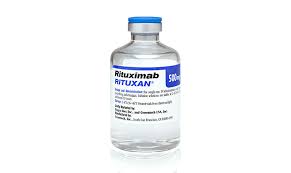
Rituximab (Rituxan) is a monoclonal antibody used primarily to treat B cell Non-Hodgkin’s Lymphoma. Monoclonal antibodies are laboratory engineered antibodies that are clones of an original parent cell that bind to the same epitope that a normal antibody can. Rituximab is a monoclonal antibody that is used to treat Non-Hodgkins Lymphoma and Chronic Lymphocytic Leukemia. Rituximab, specifically, is able to target B cancer cells by binding to CD20 on the B cells. When Rituximab binds to CD20, it eventually causes the B cell to lyse. The benefit of this is that Rituximab is able to directly kill tumor cells, while also enhancing the acquired immune system’s ability to fight the cancerous cells. To me, Rituximab seems like a promising option for those who have non-Hodgkin’s Lymphoma. For individuals with overreactive and distressed B cells, eliminating unhealthy B cells seems like an effective way of removing tumor cells.
Interestingly, Rituximab works mainly through antibody cellular cytotoxicity. This means that the Rituximab antibodies bind to CD20 on cancerous B cells. By binding, the Fc region of Rituximab is exposed for natural killer cells of the innate immune system to induce antibody cellular cytotoxicity. Rituximab essentially increases the effectiveness of NK cells. Therefore, Rituximab has the benefit of not only enhancing the effectiveness of the innate immune system, but also directly targeting the adaptive immune system via Rixtuximab binding to CD20 of B cells to directly kill cancerous B cells. I find it fascinating to see how monoclonal antibodies like Rituximab are able to integrate the innate and acquired immune system in treating cancer. Rituximab is trying to enhance the actions of the innate immune system, while downregulating the B cells of the acquired immune system. I wonder if there is a way to fine tune Rituximab to increase the expression of CD20 on B cells. I ask this because it seems the downside of this monoclonal antibody would be that if B cells do not express CD20, then there would be no binding site for Rituximab to target.
The main side effects for Rituximab are over stimulation of the immune system due to infusion reactions. This can include hives, fever, swelling, itching, and fatigue. Additionally, Rituxan can cause severe skin or mouth ulcerations. The infusion-related reactions and mouth reactions are most likely to a hypersensitivity reaction, involving IgE antibody. Furthermore, one is not supposed to take Rituximab, while diagnosed with Hepatitis B. Those who take Rituximab, while having Hepatitis B, run the risk of reactivation of the Hepatitis B virus. The reason it makes one more susceptible to Hepatitis B is because the B cells are largely involved in keeping Hepatitis B from being an active infection. Hepatitis B can be a chronic infection, so those who take the drug and lyse B cells are more at risk of having Hepatitis B reactivate. In fact, Rituximab is strongly discouraged from being used in individuals that suffer from any chronic/latent infections. These include Hepatitis C, Herpes Simplex I/II, Varicella Zoster, West Nile Virus, Parvovirus B19, and Cytomegalovirus. Finally, Rituximab is linked to Tumor Lysis Syndrome, which is the abnormally high breakdown of tumor cells. This condition can lead to kidney failure, as well as heart rhythm abnormalities associated with Rituximab. I think the side effects, as well as the certain diseases that Rituximab can make one susceptible to, have to be talked over with a physician. For conditions like non-Hodgkin’s Lymphoma, Rituximab’s benefits may outweigh the side effects. However, again, monitoring of patient’s blood, signs, and symptoms are vitally important in making sure the monoclonal antibody is doing the patient more benefit than harm.







 Infectious Disease